
Powering innovation
Spaceships high current transponder powers on-orbit AI-driven communication The solution

Power delivery network challenges

Power delivery network challenges

High power and current density

High power and current density

Low noise power delivery

Low noise power delivery

Proven radiation tolerance

Proven radiation tolerance

AI computing demands low-voltage, high-current power delivery

AI computing demands low-voltage, high-current power delivery

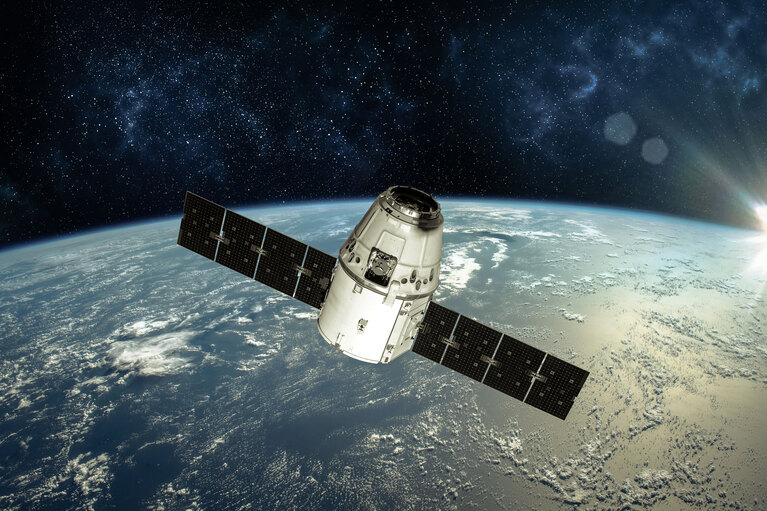
The demand for AI-enabled satellites with increasingly sophisticated computational capabilities is pushing the limits of the latest ultra-deep submicron FPGAs and ASICs and their power delivery networks. These high-performance processors have demanding, low-voltage, high-current requirements to enable AI processing on orbit. Power system design is further complicated by thermal and radiation conditions for low earth orbit (LEO) and medium earth orbit (MEO) satellites.

Delivering low noise power at the point of load

Delivering low noise power at the point of load

Spacechips AI1 Transponder is a smart, reconfigurable receiver and transmitter offering up to 133 TOPS of on-orbit AI and machine-learning performance. This level of performance will enable many new Earth-observation, ISAM, SIGINT/ISR and telecommunication applications by germinating innovative uses of AI in space, such as tracking space debris to avoid costly collisions, monitoring spacecraft system health and detecting Earth-surface hotspots and predicting flashpoints. To achieve this Spacechips has partnered with Vicor to provide the critical power architecture for on-orbit AI processing. “These microchips have an approximate core voltage of 0.8 volts with a TDC of 130 amps," said Dr. Rajan Bedi, CEO of Spacechips. "Generating such a power rail is a huge problem to solve, one that would typically require a lot of board space." The Vicor solution is very power dense, compact and thermally adept, which allows for smaller designs and greater system flexibility.

Vicor advantages

Vicor advantages

Power dense

Power dense

Proven solution

Proven solution

Radiation tolerant

Radiation tolerant

Vicor Factorized Power Architecture reduces size and weight, delivers top performance

Vicor’s proprietary Factorized Power Architecture (FPA) revolutionizes power delivery by splitting DC-DC conversion into specialized, independent modules. This innovative approach maximizes use of precious PWB space, minimizes power losses and noise and simplifies thermal management, resulting in superior performance and reliability.

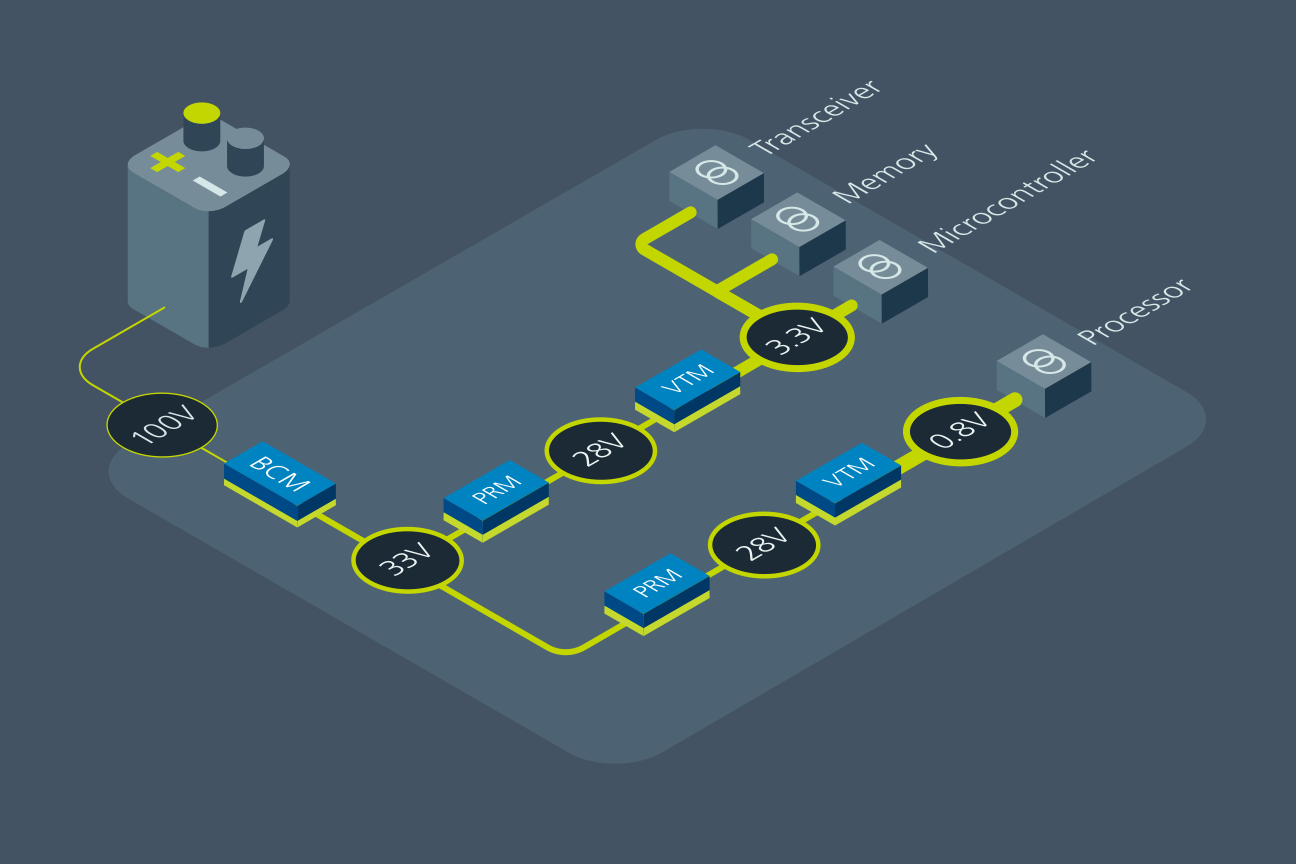
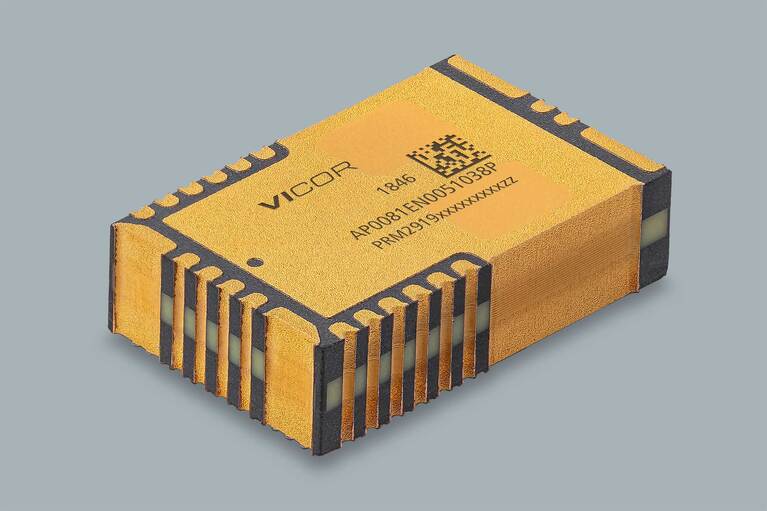
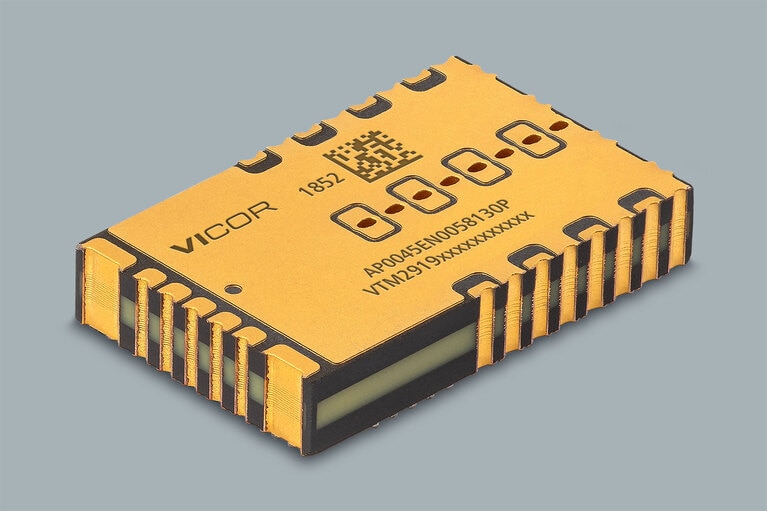
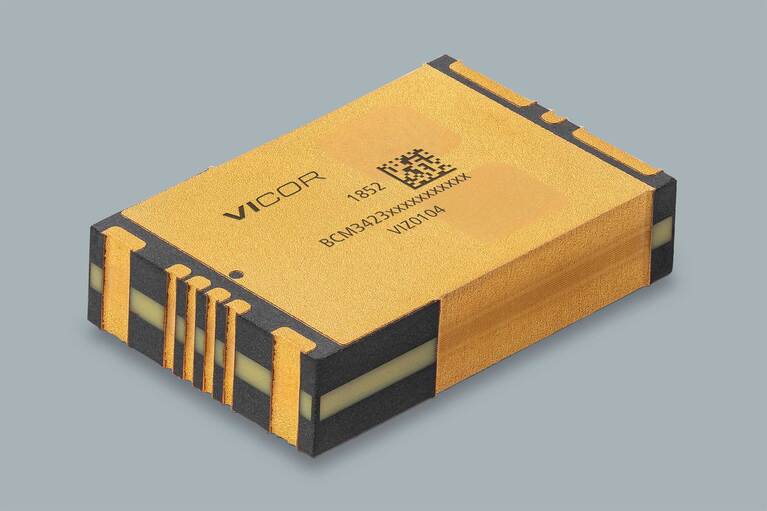
In Vicor’s radiation-tolerant product line, a 100VIN fixed-ratio Bus Converter Module (BCM) delivers critical isolation and conversion, stepping down the input voltage by one-third to supply the buck/boost Pre-Regulator Module (PRM). The PRM then precisely regulates this voltage before passing it to the Voltage Transformation Module (VTM), which converts the regulated output of the PRM to 0.8V (trimmable via the PRM from 0.42V – 1.1V) while multiplying the current by 30X for the high current FPGA supply rail.

This modular design offers unmatched efficiency, flexibility, and power density — key advantages for demanding environments such as high-performance computing in radiation-exposed applications.

The Xilinx Versal FPGA-based, reconfigurable, AI-enabled transponder allows telecommunications and SIGINT operators to perform real-time, on-board processing by autonomously changing RF frequency plans, channelization, modulation and communication standards based on live traffic needs. Vicor power converter modules also feature a dual powertrain, which for fault-intolerant space applications provides built-in redundancy that allows loads to be driven at 100 percent on each side of the powertrain.

"Vicor FPA delivers a much more elegant, efficient solution in a very small form factor,” Bedi said. “The benefits of Vicor FPA are simply an order of magnitude superior to everything else on the market.”

The power delivery network

Vicor Factorized Power Architecture (FPA) separates the functions of DC-DC conversion into independent modules. Using radiation tolerant modules, the bus converter module (BCM) provides the isolation, the pre-regulator module (PRM) provides the regulation, and the voltage transformation module (VTM) performs the DC transformation. This allows for better efficiency, flexibility and higher power density, especially in high-performance computing applications.

Vicor PRM™ 穩壓器

PRM™ 穩壓器


非隔離穩壓


輸入:48V (36 – 75V)


輸出:48V (5 – 55V)


功率:高達 600W


峰值效率:98%


小巧至 22.8 x 13.8 x 7.41 毫米  


Vicor VTM® 電流倍增器

VTM™ 電流倍增器


隔離 固定比率


輸入: 0 – 60V


輸出: 0 – 55V


電流: 高達 115A


峰值效率: 97%


小巧至 22.83 x 8.52 x 4.9 毫米


Vicor BCM® 母線轉換器模組

BCM® 母線轉換器


隔離固定比率


輸入:800 – 48V


輸出:2.4 – 55.0V


電流:高達 150A


峰值效率:98%


小巧至 22.0 x 16.5 x 6.7 毫米