Powering AI at scale
Maury Wood appears on Electronic Specifier podcast explaining the challenges of powering AI and unveiling the trends toward wafer-scale processors



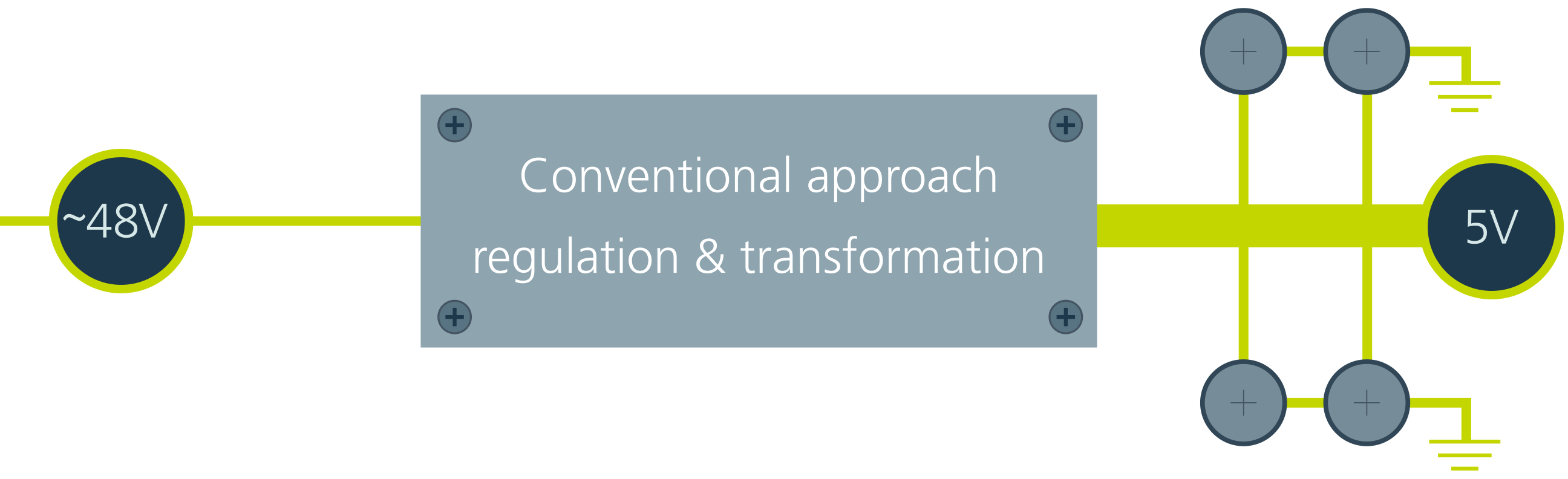
Size of power converter prevents it from being placed close to load

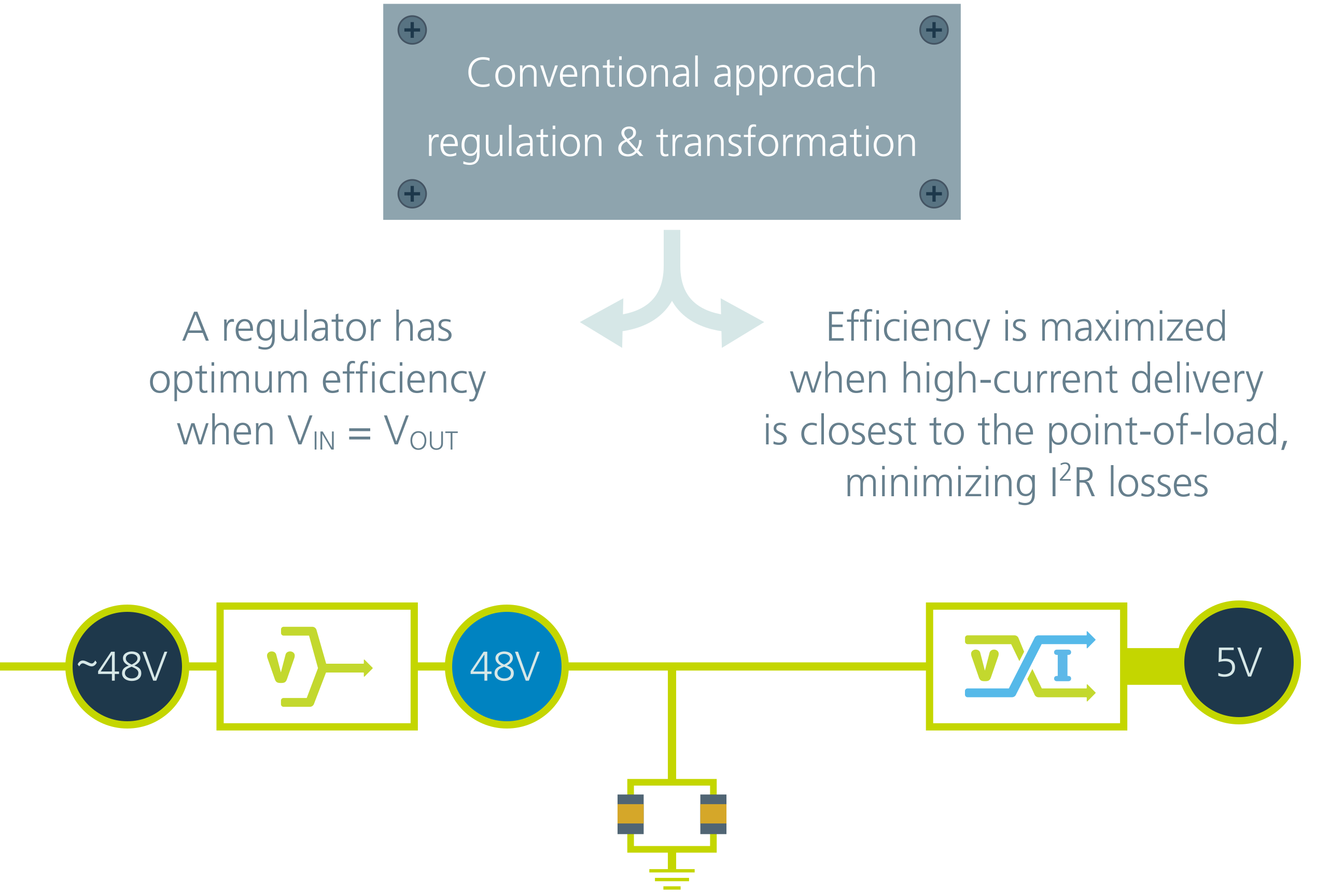
High output current causes large line (I2R) losses

Large bulk-electrolytic caps crowds space near the load

Switcher close to load causes noise
Minimizes wasted energy

Low EMI

Adjusts for any load
Scales for power demands
High density

Component position flexibility
Fast transient response

Easy, modular design
The PRM uses the factorized bus current to regulate the voltage on the secondary of the VTM and provides 1% regulation at the PoL without voltage sense lines.
One regulator can drive multiple transformation stages (VTM) to provide different PoL voltages.
With its low output impedance, smaller ceramic capacitors (up to 1000x less capacitance) may be used at the VTM input in place of PoL bulk capacitors.
Select VTMs operate with source power applied to input or output terminals to support bi-directional applications.
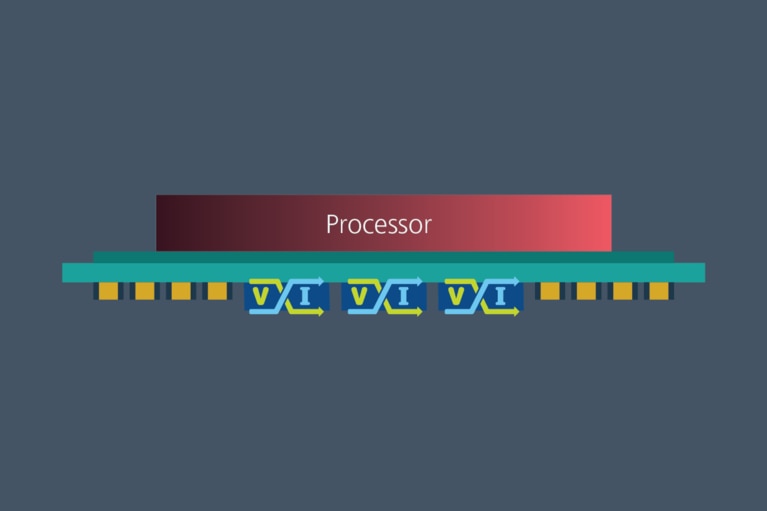
Enables Power-on-Package technology and on motherboard for high current XPUs.
Powering AI at scale
Maury Wood appears on Electronic Specifier podcast explaining the challenges of powering AI and unveiling the trends toward wafer-scale processors
Power Corner: Vicor’s Maury Wood on vertical power delivery for AI data centers
Vicor’s 48V Factorized Power ArchitectureTM uses vertical power delivery to cut I2R ...
Current gain and current density essential to power AI today: Patrizio Vinciarelli interview
Patrizio Vinciarelli, CEO of Vicor shares insights on powering AI today and its extraordinary current demands and the need to easily scale
Powering AI Processors using a 48V Factorized Power Architecture™
Using a 48V Factorized Power Architecture™ to overcome traditional multiphase limitations and drastically cut I²R thermal losses for high-demand loads