Power Corner: Vicor’s Maury Wood on vertical power delivery for AI data centers
Vicor’s 48V Factorized Power ArchitectureTM uses vertical power delivery to cut I2R ...


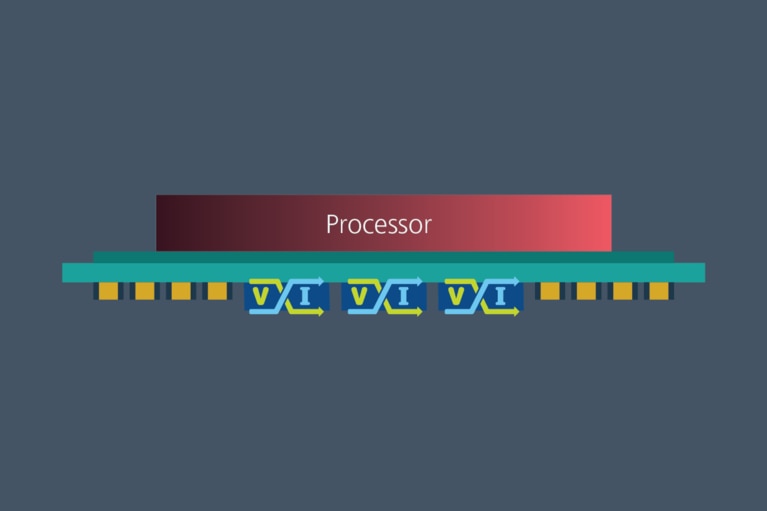
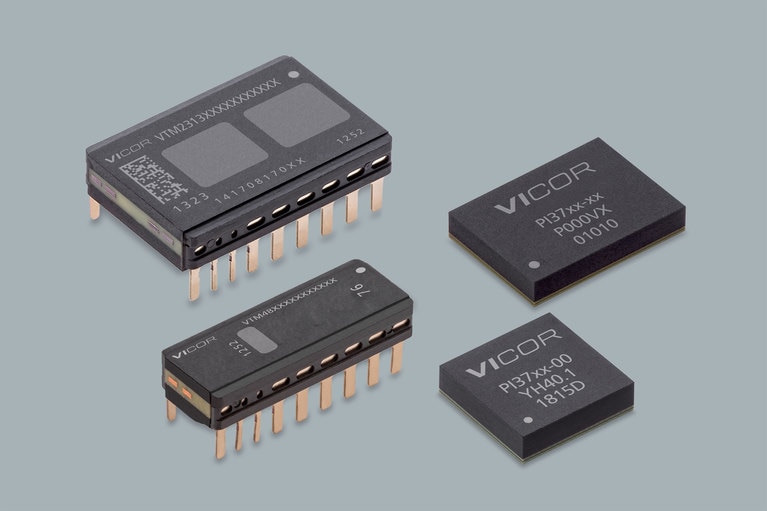
48Vから直接PoLへ電力変換してCPU、GPU、ASIC、メモリへ給電する、要求仕様が厳しい非絶縁のサーバアプリケーションでは、データセンター向けPRM・VTMのソリューションを使うことで Factorized Power Architecture™ (FPA)のメリットを生かすことができます。このソリューションによって、高性能コンピューティング用の電源に求められる、高電力密度、高効率、低ノイズが実現します。
条件で絞り込む
| 製品番号 | Datasheet | 入力電圧 (V) | 出力電圧 (V) | 出力電流(A) | 出力電力(W) | VTMとの接続対応 | パッケージ | 実装方式 | 温度 | Dimensions mm | Dimensions in. | カートに入れる/詳細を見る |
|---|---|---|---|---|---|---|---|---|---|---|---|---|
条件で絞り込む
| 製品番号 | Datasheet | 入力電圧 (V) | 出力電圧 (V) | 出力電流(A) | Kファクター | 実装方式 | 温度 | Dimensions mm | Dimensions in. | パッケージ | カートに入れる/詳細を見る | |
|---|---|---|---|---|---|---|---|---|---|---|---|---|
| Datasheet: | 入力電圧 (V): 43.2 (26.0 - 55.0) |
出力電圧 (V): 1.8 (1.0 - 2.29) |
出力電流(A): 95.0 |
Kファクター: 1/24 |
実装方式: SMD |
温度: -40 to +125°C |
Dimensions mm: 13.49 x 22.5 x 4.5mm |
Dimensions in.: 0.531 x 0.866 x 0.177in |
パッケージ: 1323 |
View Details | ||

非絶縁型レギュレータ

ZVS 昇降圧技術

1MHzの動作周波数

最大103W/cm3の電力密度
非絶縁型電圧変圧器

最大135Aの出力電流
高周波 (数MHz)ZCS/ZVS Sine Amplitude Converter(SAC™)技術

高速な過渡応答
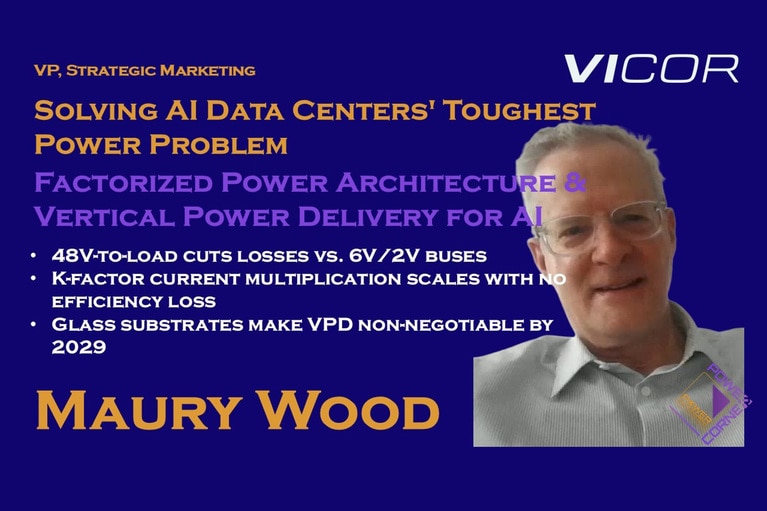
Power Corner: Vicor’s Maury Wood on vertical power delivery for AI data centers
Vicor’s 48V Factorized Power ArchitectureTM uses vertical power delivery to cut I2R ...
Powering AI at scale
Maury Wood appears on Electronic Specifier podcast explaining the challenges of powering AI and unveiling the trends toward wafer-scale processors
Current gain and current density essential to power AI today: Patrizio Vinciarelli interview
Patrizio Vinciarelli, CEO of Vicor shares insights on powering AI today and its extraordinary current demands and the need to easily scale
Powering AI Processors using a 48V Factorized Power Architecture™
Using a 48V Factorized Power Architecture™ to overcome traditional multiphase limitations and drastically cut I²R thermal losses for high-demand loads