
Arrow: Driving the future of industry in robotics, industrial IoT, and intelligent automation seminar 2026
Industry-leading power density and innovative architectures of Vicor power modules for robotics, industrial IoT, and intelligent automation


Betterfrost has developed a 48V power control module utilizing Vicor high-density power technology to solve extreme cold-weather efficiency loss in electric vehicles. Traditional EV HVAC systems consume massive amounts of energy using brute-force air heating to clear windshields, drastically reducing driving range in winter conditions. By shifting to conductive, pulsed surface-specific heating, Betterfrost melts ice in under 60 seconds while reducing startup energy consumption by 95%.
Drivers in cold climates know that the chore of defrosting windshields is a laborious seasonal reality. Time-saving hacks abound, from scrapers and defrost sprays to the ill-advised hair dryer. In the end, the traditional residual car engine heat and blower fans are the proven remedy, even if that means waiting (and waiting) for the heat to reach its ice-melting threshold.
For automotive engineers, the defining challenge of the EV era isn’t raw power or peak charging speed; it is thermal management. As vehicles transition to 800V architectures and massive battery packs, the industry is confronting a brutal reality: cold weather is a range killer.
While modern EVs can achieve driving ranges of 500km or more per the drive cycle testing standards such as WLTP (Worldwide Harmonized Light Vehicle Test Procedure) in Europe, CLTC (China Light-Duty Vehicle Test Cycle) in China, or EPA in the US, the moment it hits real-world winter, its efficiency collapses. Data from the 2026 Yakeshi Winter Mega-Test in Inner Mongolia (–25°C) and the NAF (Norwegian Automobile Federation) Winter Test confirmed that most EVs lose between 35% and 55% of their rated range in extreme cold. That means a 500km EV in summer may have a range retention of only 250 – 350km in winter.
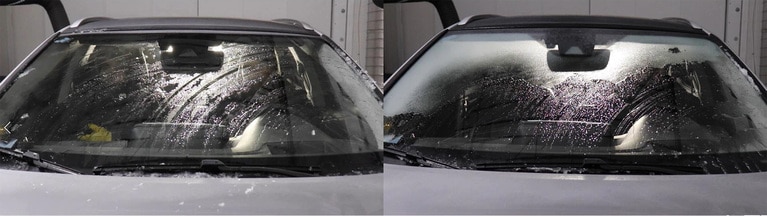
Figure 1: Betterfrost Technologies can melt ice in less than 60 seconds in most cases. The Betterfrost solution pivots from bulk air heating to conductive, surface-specific heating, managed by a highly optimized 48V power control module.
This isn’t a battery chemistry failure; it is a thermal management crisis. When an EV wakes up at –20°C, the conventional PTC (Positive Temperature Coefficient) cabin heater is an enormous energy drain, pulling a continuous 7kW to 10kW just to defrost the windshield and warm the frozen cabin air and the mass of the seats and other materials.
Enter Betterfrost, a specialist in thermal power control that has identified the structural inefficiently of this approach. The company has developed an optimized 48V power control module for conductive heated glass that provides pulsed power to the inside of the glass to remove frost and ice at start up and then keep fog or mist from forming on the glass during driving without heat draining to the exterior. This approach saves 95% of the energy at start up, enables the cabin to reach cabin comfort (e.g., +22°C) in half the time, and reduces total cabin energy use during driving by 15 – 25%.
The legacy brute-force approach emanates from transferring the ample waste heat generated by internal combustion engines (ICE) to the windshield. But as passenger cars and commercial trucks transition to electric powertrains, free-heat byproduct disappears, leaving vehicles to draw energy from the main battery to defrost and defog, the same power source that provides propulsion. This traditional approach has replaced the heat source from the combustion engine to a PTC heater, below 0°C when a heat pump stops working. However, it is still an exercise in thermodynamic brute force. To clear a frosted windshield, a standard HVAC system, like that in a Tesla Model Y, must heat the entire cabin air volume to above freezing.
The Energy Transfer Chain is inherently inefficient as it passes through five stages:
Current approaches to a –20°C standard defrost cycle can consume ~2.8kWh of energy before the driver can even safely see the road and start driving, up to 20 minutes after starting the vehicle. It also can take 10 minutes for the cabin to reach cabin comfort at +15°C from a cold start.
“With HVAC heat, you are essentially using a 10kW hairdryer to melt a thin layer of ice from three feet away," says Betterfrost CTO, Dr. Sameh Saad. “The current way that we defrost things is just flooding the surface with heat,” said Betterfrost CEO and automotive industry veteran, Derrick Redding. “Think of spraying heated glycol on a plane with frost or a car blowing hot air on glass. You’re melting all the ice, and that phase change uses so much energy.”
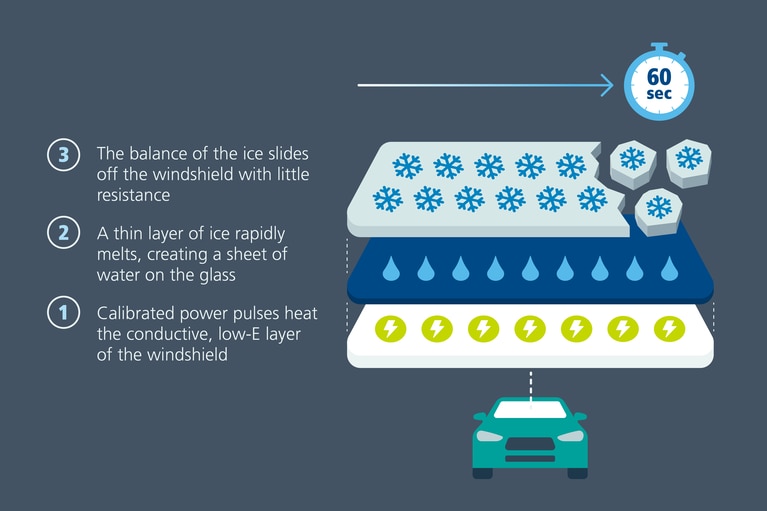
Figure 2: Betterfrost, a specialist in thermal power control, has developed an optimized 48V power control module for conductive heated glass that provides pulsed power to the inside of the glass to remove frost and ice in 60 seconds. This approach saves 95% of the energy at start up, enables the cabin to reach cabin comfort (e.g., +22°C) in half the time, and reduces total cabin energy use during driving by 15 – 25%.
The Betterfrost solution bypasses those five stages of heat transfer, the middleman, heating from inside the glass by providing, a highly optimized 48V pulsed power control module.
This module controls power delivery to a transparent, conductive silver layer, laminated directly within the windshield glass. This silver layer provides a low-emissivity (low-E) layer to reflect IR radiation from heating up the car in warmer months. In the winter, Betterfrost makes this transparent conductive layer an active heater. By moving to a 48V subsystem, the emerging voltage standard for high efficiency, Betterfrost can deliver the exact heat required to release ice from a surface without melting the entire mass of ice or losing heat to the surroundings. The pulsed power controls heat penetration to limit the heat reaching within only 0.1mm of the surface in order to heat the interfacial layer of the ice. Because conductive heating acts directly on the ice, it melts this interfacial layer almost instantly, allowing the rest of the ice sheet to simply slide off. This reduces energy consumption by 95%.
“It doesn’t matter how thick the ice is. Our method uses the same amount of energy and time to remove it," according to CEO Redding.
The 48V Betterfrost system doesn't just clear the glass; it redefines "time to comfort," a key metric in the emerging C-EDTC (China-Energy Development & Testing Certification) winter protocol.
Because the windshield is no longer a massive heat sink fighting the cabin air, the entire interior warms faster. Betterfrost testing shows that when the defrost heating is managed entirely by heated glass, the HVAC air can be directed into the cabin and thereby reduces the time required for the cabin to reach +15°C, by 50%.
The true value of 48V conductive heating is realized during driving – either a drive cycle test or the steady state phase of a 100kph highway drive. At highway speeds, the convective "stripping" of heat from the windshield is immense.
Keeping mist or fog from forming on the glass using heated glass reduces the heat loss versus blowing heated air across a windshield. This provides enough energy to prevent condensation and ice formation, while the primary cabin air heater runs at a reduced duty cycle.
This optimized thermal strategy delivers a 15 – 25% savings during –7°C drive cycle testing. This is effectively "found capacity" amounting to 7.5kWh of energy saved on a 500km trip.
A critical piece of the Betterfrost solution is 48V power electronics. For this, they reply on Vicor power dense, automotive-qualified 800V or 400V to 48V fixed-ratio BCM® bus converters to deliver safe, efficient, high-speed pulses to glass surfaces.

Figure 3: Vicor BCM® bus converter functions as a DC-DC transformer. The voltage applied to the high-voltage side is transferred to the low-voltage side according to the module’s fixed conversion ratio or K factor. For example, with a K of 1/16 and an 800V input, the output voltage would be 50V. Correspondingly, the output current is multiplied by the same ratio—so if the input current is 5A, the output current would be 5A × 16 = 80A.
Vicor BCM modules meet strict creepage and clearance standards in a compact footprint that’s up to 90 percent smaller than conventional DC-DC converters.
"Vicor makes 48V power delivery easy to derive without excessive size or weight limitations,” Redding said. “Nobody else does what they do at that level of efficiency and power density."
The combination of Betterfrost proprietary power control algorithms with Vicor power conversion technology makes for a plug-and-play solution that OEMs can adopt quickly across multiple vehicle platforms. The Vicor BCM enables increased power delivery, providing up to 3.1kW at a 25% duty cycle for 20ms.
Betterfrost technology is well-suited for other industries, too. It can replace costly glycol spray used to defrost airplane wings, eliminate dangerous ice build-up on wind turbine blades, and lower cold storage refrigeration costs by enabling more energy-efficient defrost cycles.
The winter range collapse seen in the Norway and Mongolia tests are unsustainable for the widespread adoption of EVs.
In EVs, every watt matters. However, today’s battery-powered in-cabin climate systems closely mimic the legacy ICE standard, crudely and inefficiently heating air and blowing it across glass. Additionally, EV cabins are sealed tighter for noise reduction, which makes fogging a bigger problem. While ICE drivers endure slow defrost times, EV drivers face even worse defrost performance coupled with distressing range penalties. What worked for gas-powered vehicles is a poor fit for the future of electrification.
Betterfrost is actively engaging automakers and Tier 1 suppliers, with early adoption in commercial trucks and premium EVs. Over the next three to five years, the company expects to expand automotive deployment in EV and hybrid platforms, to close the range retention gaps observed in winter weather operations.
From a laboratory insight to an automotive disruptor, Betterfrost is building out its ecosystem with partners like Vicor to redefine how vehicles handle one of winter’s oldest problems. With broad EV adoption accelerating and legacy systems in need of repair, the Betterfrost pulsed-power solution is arriving just in time.
This article was originally published by Electronics World.
Arrow: Driving the future of industry in robotics, industrial IoT, and intelligent automation seminar 2026
Industry-leading power density and innovative architectures of Vicor power modules for robotics, industrial IoT, and intelligent automation
Digitimes key pathways for unmanned vehicle technology
Learn about high-density power conversion for UAVs
Accelerate your move to a high performance 48V power delivery network
This eBook provides guidance on designing 48V power delivery networks to enhance the performance, efficiency, and reliability of industrial products
Build better UAVs using modular power
Power Delivery Networks (PDN) based on Vicor high performance power modules enable innovative designs for the next generation of UAV development