
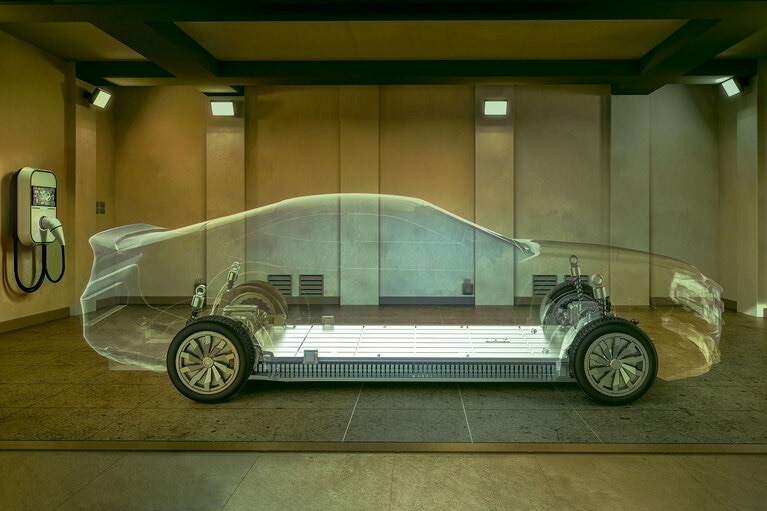
INFAC bolsters EV range by packing more power into the battery pack
INFAC integrates the DC-DC converter into EV battery pack to leverage cooling system and save space. 48V power dense modules help downsize cable and connectors to boost range.



Size and weight

Design flexibility and speed

Fast power transformation
Cold weather climates grapple with the problem of quickly and efficiently defrosting automobile windshields. The legacy approach of channeling the wasted heat generated by internal combustion engines (ICE) to the windshield is slow and inefficient. The windshield defrosts in non-uniform pattern and wastes energy by melting the entire ice layer.
“The traditional way that automobiles defrost glass is just flooding the surface with heat,” said Betterfrost Technologies CEO Derrick Redding of this industry’s legacy methods of dealing with icy windshields.
In cold weather conditions EVs and PHEVs do not produce any waste heat to be recovered, a major change from ICE systems. That leaves the vehicle to draw energy from the main battery – the same power source that provides propulsion. This drains the battery and reduces range, a noted consumer concern with EVs.

Power dense

Easy modular design

8.0M Amp / second power transient rate
Betterfrost Technologies (Betterfrost), has unveiled their rapid ice melting technology that leverages 48V and a propriety algorithm. Their breakthrough premise is that ice does not need be melted completely to be removed from the windshield. It’s enough to weaken the bond between ice and glass at the “interfacial layer.” This allows ice to easily slip off the window vs melting all of it.
By sending short, controlled pulses of power through the glass surface, Betterfrost creates a thin, quasi-liquid layer beneath the ice, releasing it instantly from the windshield without wasting energy by heating the entire surface. The pulsed power interacts with the windshield’s fully-coated, low-emissivity (low-E) glass layer. Low-E conductive coatings, like silver or indium tin oxide, serve as the electrical pathway for uniform distribution of heat through the Betterfrost proprietary power control algorithms. Betterfrost controls energy and melts a very thin ice layer in less than a minute (its record is 42 seconds) using 20X less energy compared to nearly 25 minutes for traditional HVAC systems.
"The key insight was getting the ice to release off a surface,” said Redding. “The most efficient way is to pulse power so the heat only reaches the interfacial layer – maybe a tenth of a millimeter – so the ice just slides right off. And it doesn’t matter how thick the ice is. Our method uses the same amount of energy and time to remove it."
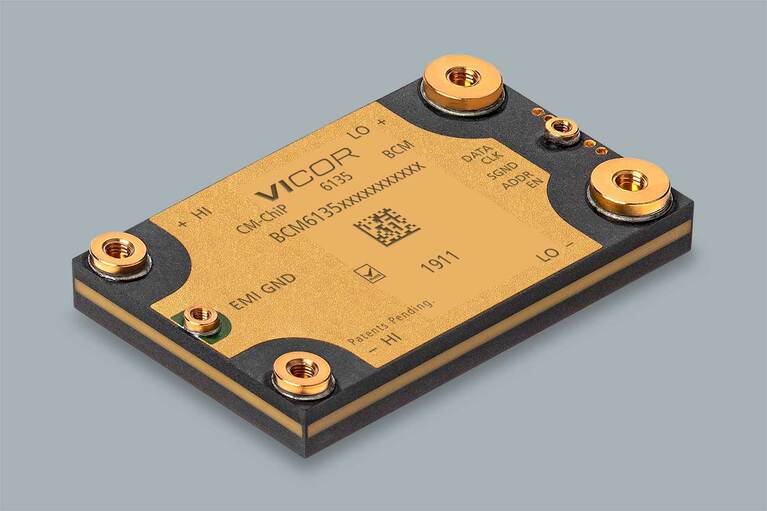
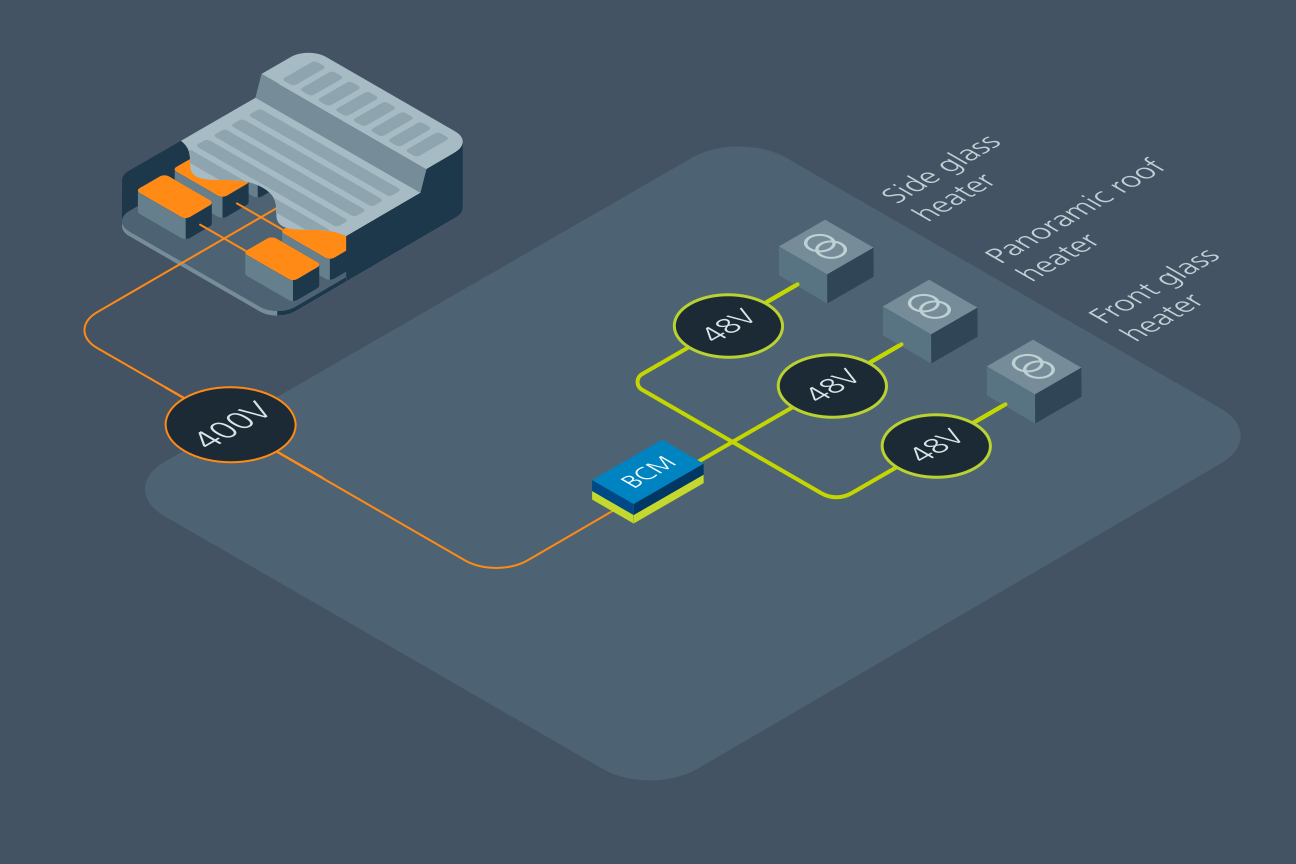
For 48V power electronics Betterfrost’s solution relies on power-dense, automotive-qualified 800V and 400V to 48V fixed-ratio Vicor BCM® bus converters to deliver safe, efficient, high-speed pulses to glass surfaces.
The Vicor BCM functions as a DC-DC transformer. The voltage applied to the high-voltage side is transferred to the low-voltage side according to the module’s fixed conversion ratio or K factor. For example, with a K of 1/16 and an 800V input, the output voltage would be 50V. Correspondingly, the output current is multiplied by the same ratio—so if the input current is 5A, the output current would be 5A × 16 = 80A. Vicor's technology is astoundingly fast in transitioning; it switches from 0A to 80A at 8.0M amps/ second, which supports challenging power profiles with fast pulsing or regeneration. Vicor BCM modules are very compact, up to 90 percent smaller than conventional DC-DC converters.
"Vicor makes 48V power delivery easy to derive without excessive size or weight limitations,” Redding said. “Nobody else does what they do at that level of efficiency and power density."
The combination of Betterfrost proprietary power control algorithms with Vicor power conversion technology makes for a plug-and-play solution that OEMs can adopt quickly across multiple vehicle platforms. The Vicor BCM enables increased power delivery, providing up to 3.1kW at a 25% duty cycle for 20ms.
BCM6135 series
Isolated fixed-ratio
Input: 400V (260 – 410V)
Output: 48V (32.5 – 51.3V)
Current: Up to 65A
Power: 2.5kW
Peak efficiency: 97.9%
61 x 35 x 7.4mm
INFAC bolsters EV range by packing more power into the battery pack
INFAC integrates the DC-DC converter into EV battery pack to leverage cooling system and save space. 48V power dense modules help downsize cable and connectors to boost range.
Automotive Innovation Day 2026
Vicor presented innovative benefits of using compact, power dense DC-DC conversion
48V instead of 12V: DC‑DC converters in focus of the SDV
Future vehicles use 12V, 48V, and HV rails. Vicor experts discuss the vital role of DC-DC converters in SDVs, focusing on energy efficiency and safety
How are automotive electronics evolving?
Power delivery networks in automotive are being taxed more than ever today. Learn how Vicor is helping design more efficient power systems