
INFAC bolsters EV range by packing more power into the battery pack
INFAC integrates the DC-DC converter into EV battery pack to leverage cooling system and save space. 48V power dense modules help downsize cable and connectors to boost range.



Size and weight

Thermal management

Efficient power conversion
Increasing EV range with higher battery power, improving power efficiency and lowering vehicle weight is a top priority for every EV OEM. The power system design challenge comes down to, how to pack more power into a smaller form factor, while enhancing efficiency. This challenge is pushing power system engineers to reimagine battery and power distribution architectures and power conversion engines, with additional focus on heavy, costly and inefficient power cables and connectors.

Power dense

Thermally adept

Highly efficient
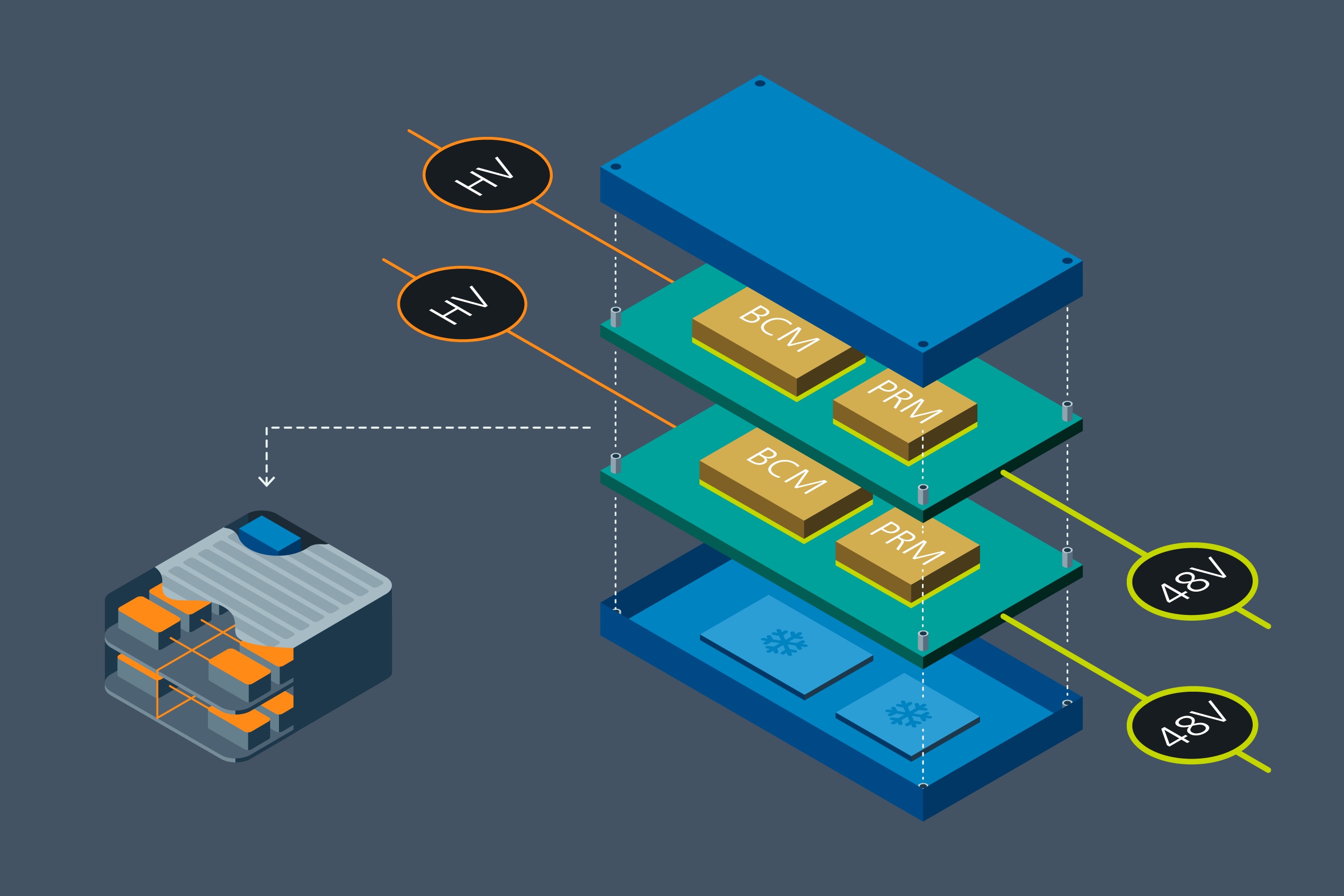
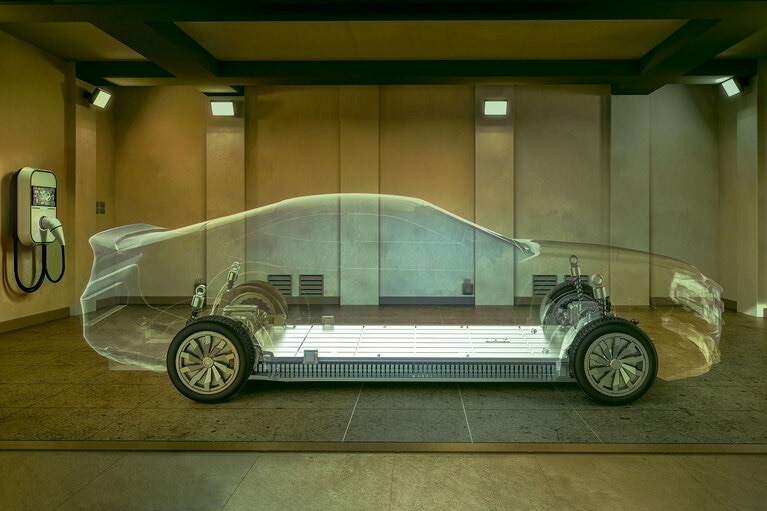
An EV battery pack incorporates a robust liquid cooling system designed to manage thermal loads, so INFAC re-imagined how to maximize the use of this cooling system. By integrating the high voltage DC-DC converter inside the battery, and leveraging the existing infrastructure INFAC eliminated the separate cooling system which traditionally resides outside the battery pack for the DC-DC converter. This departs from conventional “silver-box” design approaches by positioning the battery pack as a central, intelligent power hub rather than a passive energy source.
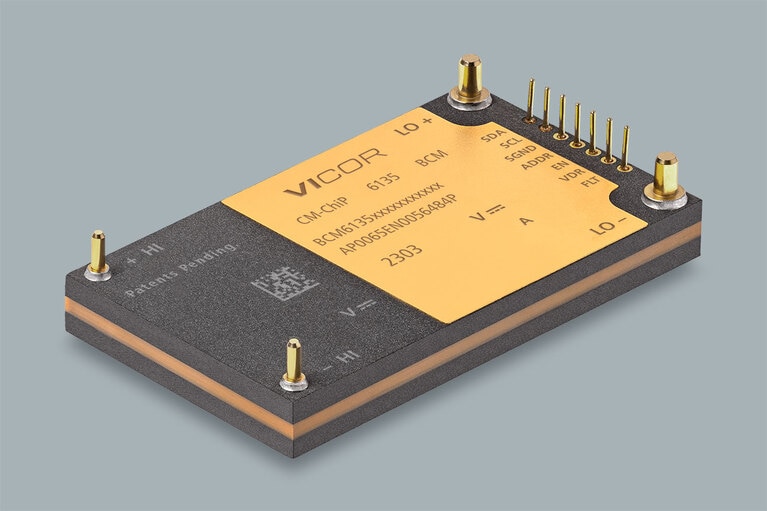
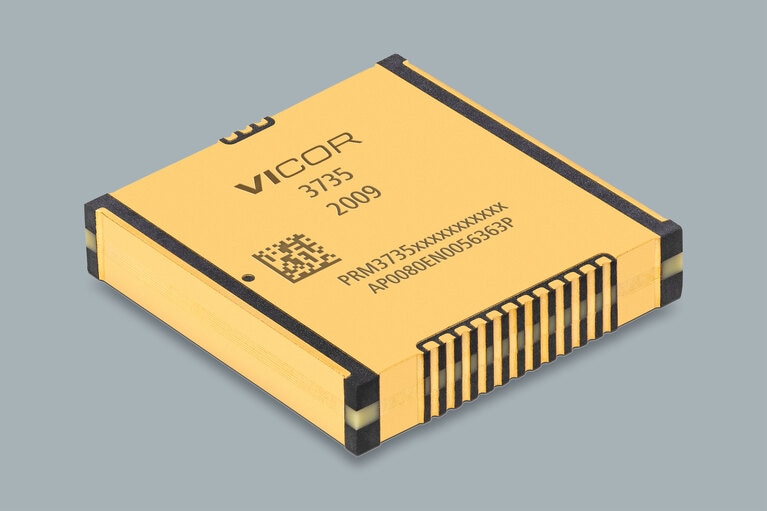
Transitioning to a 48V zonal architecture with DC-DC conversion integrated within the battery pack has been inhibited by the size and bulk of traditional DC-DC converters. Vicor high-density power modules provide the compact form factor and efficiency required to make battery-integrated 48V distribution practical at scale. Vicor high-density BCM6135 DC-DC converters and PRM3735 regulators provide HV-to-48V conversion and regulation enabling a high-power, fully isolated and regulated bus for the zonal architecture. INFAC’s novel solution using Vicor technology positions the battery pack as a central power management and distribution hub for next-generation electric vehicles.
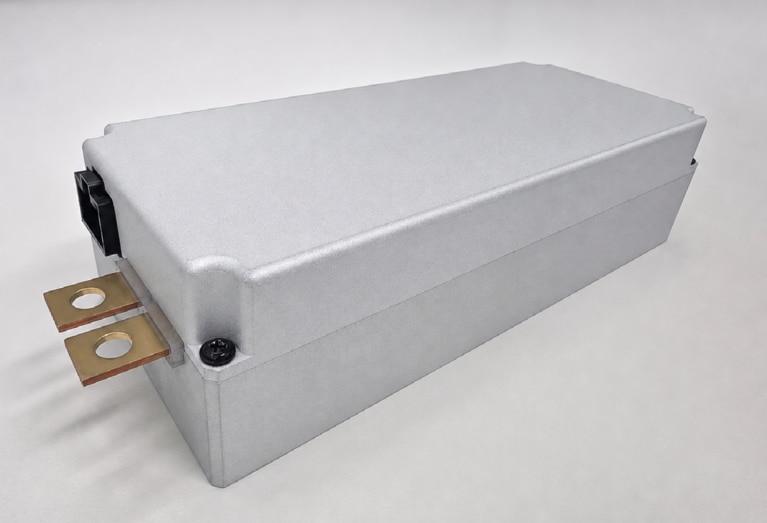
To fit inside the car battery pack, the system form factor had to be extremely small. The INFAC system is 215 x 45 x 82mm (W/D/H). The volume is 0.79 liter and it weighs approximately 1.5kg.
To fit inside the car battery pack, the system form factor had to be extremely small. The INFAC system is 215 x 45 x 82mm (W/D/H). The volume is 0.79 liter and it weighs approximately 1.5kg.
INFAC moved the DC-DC converter modules inside the battery pack to capitalize on the robust liquid cooling system. A separate dedicated cooling system for the DC-DC converter was eliminated improving EV range and efficiency.
INFAC moved the DC-DC converter modules inside the battery pack to capitalize on the robust liquid cooling system. A separate dedicated cooling system for the DC-DC converter was eliminated improving EV range and efficiency.
BCM6135 series
Isolated fixed-ratio
Input: 800V (520 – 920V)
Output: 48V (32.5 – 57.5V)
Current: Up to 80A
Power: 2.5kW
Peak efficiency: 97.3%
61 x 35 x 7.4mm
PRM3735 series
Non-isolated regulated
Input: 48V (31 – 58V)
Output: 48V (36 – 54V)
Power: 2.5kW
Peak efficiency: 99.2%
36.6 x 35.4 x 7.4mm
INFAC bolsters EV range by packing more power into the battery pack
INFAC integrates the DC-DC converter into EV battery pack to leverage cooling system and save space. 48V power dense modules help downsize cable and connectors to boost range.
Automotive Innovation Day 2026
Vicor presented innovative benefits of using compact, power dense DC-DC conversion
Quickly modifying a standard SOSA supply to meet an applications hold-up requirements for vehicle protection and countermeasures
Learn how Vicor delivers power to vehicle protection and countermeasures systems using a configured SOSA aligned power supply
Adjusting one of the VITA supply voltage outputs easily and quickly for ground mobile radar
Learn how Vicor delivers power to ground mobile radar using time- and cost-effective Vicor VPX solutions