


Enabling resilient, scalable supply chains
Vicor Patents Licensed to OEMs and Hyperscalers
Vicor's licensing practice
Vicor’s licensing practice enables OEMs and hyperscalers to multi-source power system technology pioneered and patented by Vicor. It started back in 2021 when a leading OEM faced the risk of an importation ban because suppliers to the OEM used modules infringing Vicor’s NBM related patents. The OEM proactively took a license securing multi-source, scalable access to licensed products. It thus avoided the risks of patent infringement at the small cost of a unit royalty for each NBM module used in its computing systems. A few years later, the OEM took an even more cost-effective “all-inclusive” license to computing systems covered by any patent in Vicor’s portfolio for a royalty amount based on the OEM’s expected use of licensed technology for the term of the license.
From an early adopter to leading licensees
Among prominent OEMs and hyperscalers, the roster of licensees has expanded in 2025 and in 2026 with recent additions. Increased licensing activity followed two International Trade Commission (ITC) investigations into infringing NBMs. ITC Investigation No. 337-T A-1370 led to an exclusion order causing infringing computing systems to be subject to an importation ban enforced by U.S. Customs and Border Protection. ITC Investigation No. 337-TA-1484 is progressing with an Evidentiary Hearing scheduled for January 2027. The most recent license, covering Vicor patents to Vertical Power Delivery (VPD), was signed in September 2026 after filing a third ITC case alleging VPD infringement by power module makers and contract manufacturers. Since VPD enables high performance GPUs, TPUs, WSEs and DPUs, OEMs and hyperscalers need a license. They can secure it proactively, at a low royalty rate, or, as the ITC investigation into VPD infringement progresses to an exclusion order, at escalating royalty rates.
A reliable, scalable ecosystem
Infringing power module makers have hidden visibility to their copycat products, including NBM and VPD products, to hide evidence of infringement. They are being caught, causing supply chain disruption, for which monetary liability from indemnification to customers is not a remedy. A reliable supply chain cannot use patented technology without a license.
Vicor’s licensing practice has been developed by an inside team and outside counsel, including four law firms partnering with Vicor to protect its IP. Infringement of Vicor IP may be reported by contacting Vicor at respectIP@vicorpower.com.
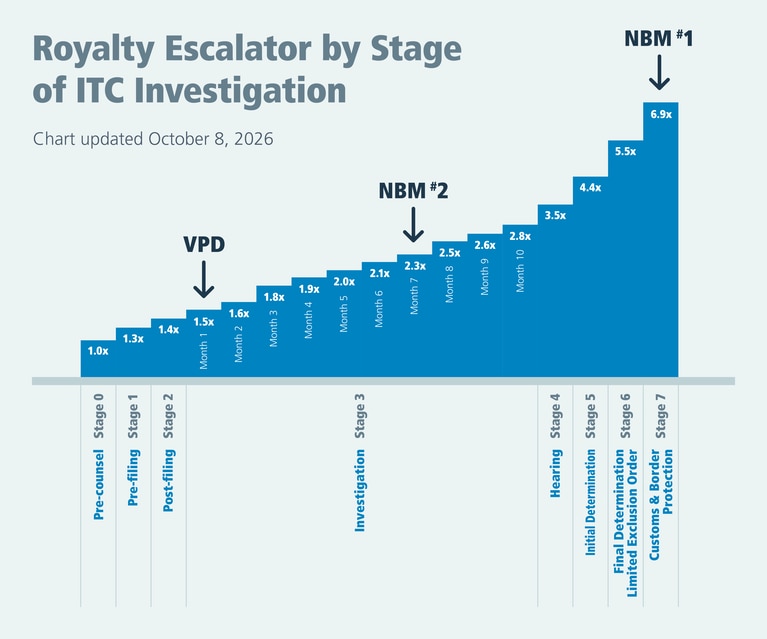
Vicor’s licensing practice offers royalty rate structures favoring early adopters. OEMs and hyperscalers taking a wait-and-see approach, or playing a game of catch-me-if-you-can, are required to pay higher royalty rates. The royalty rate rises at each stage of Vicor’s enforcement efforts in direct proportion to a Royalty Escalator (RE) factor starting at 1X and approaching 7X upon enforcement of an exclusion order by Customs and Border Protection.
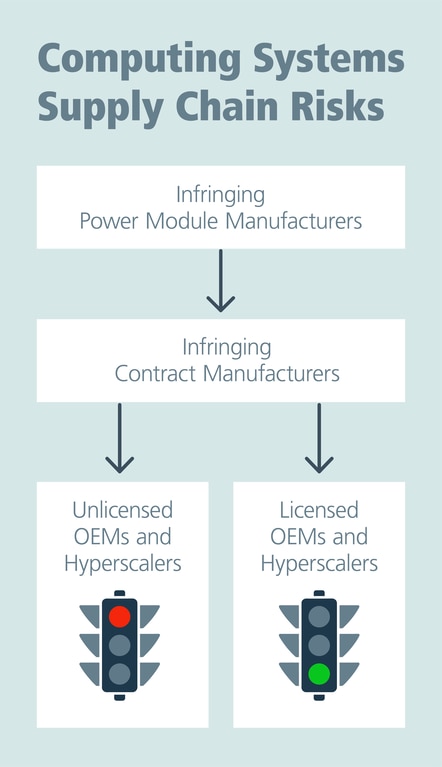
As with the prior completed ITC investigation, an exclusion order will result in an importation ban into the US of infringing computing systems destined to unlicensed OEMs and unlicensed hyperscalers. Licensed OEMs and licensed hyperscalers are unaffected by exclusion orders.
IP Licensing news
September 17, 2026
October 20, 2025
More about Vicor technology
Article
Current gain and current density essential to power AI today: Patrizio Vinciarelli interview
Patrizio Vinciarelli, CEO of Vicor shares insights on powering AI today and its extraordinary current demands and the need to easily scale
Article
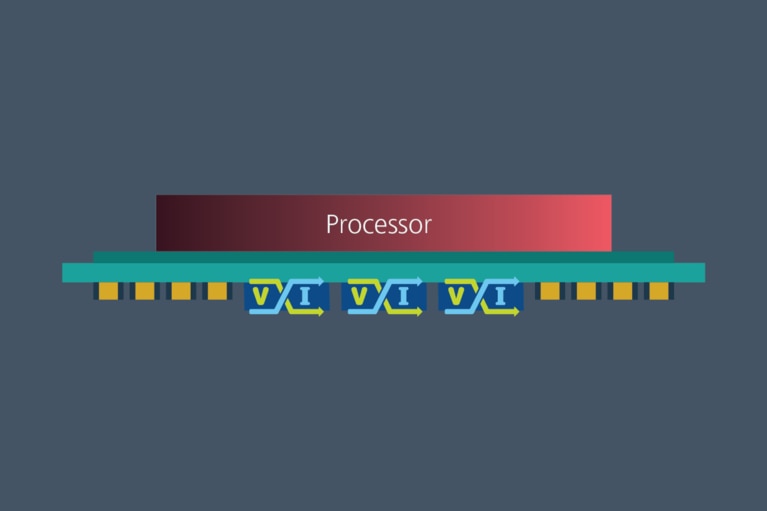
Powering AI processors using a 48V Factorized Power Architecture
48V Factorized Power Architecture™ overcomes traditional multiphase limitations and drastically cuts I2R thermal losses for high-demand loads

Article
Running in the right direction with 48V for AI processor power
As demand for AI processor power soars, everyone is seeking the best approach to power it. The answer is simpler than you might think – just look to I2R
Article
Current multipliers: The obvious choice for powering AI processors and other demanding applications
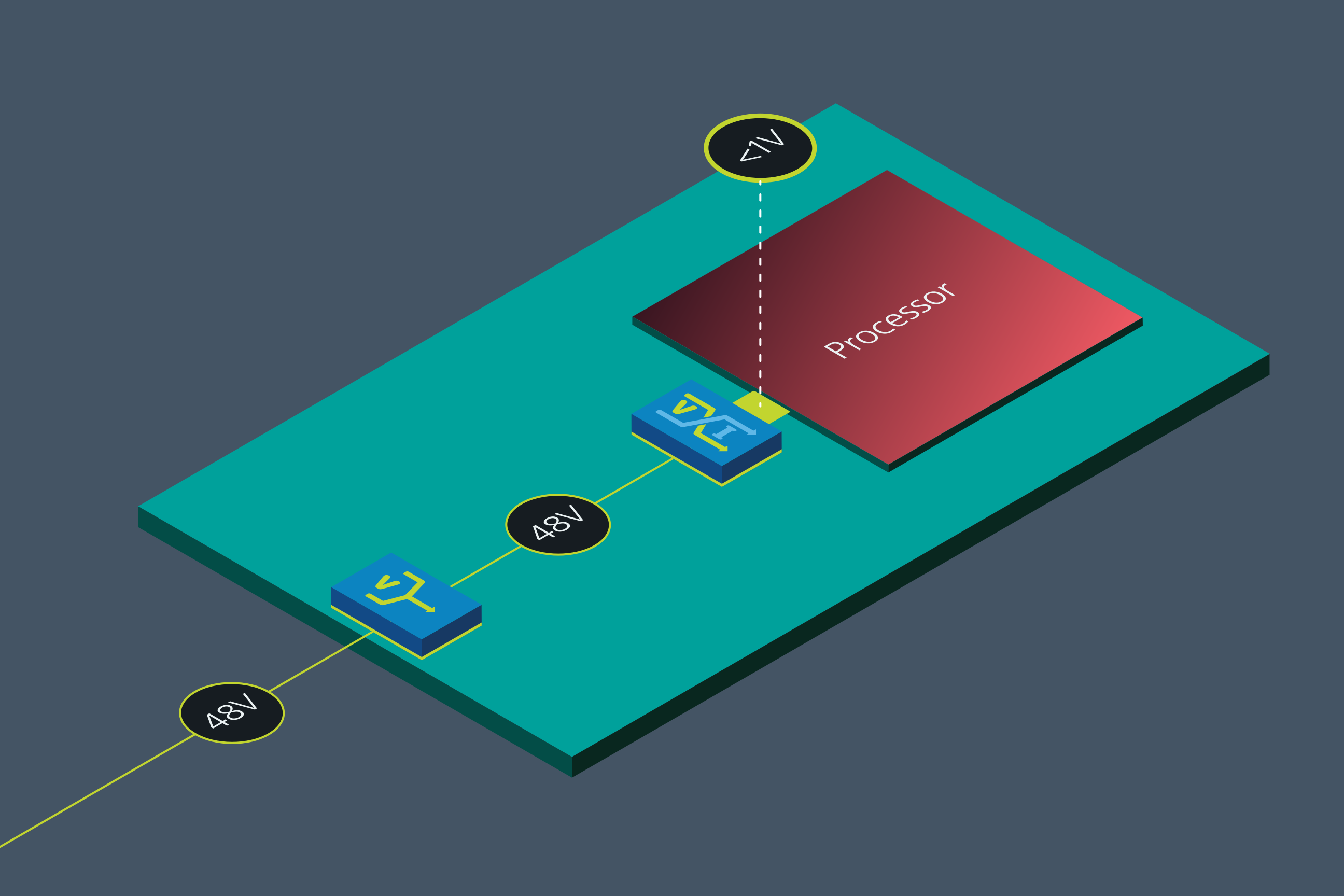
AI processors need to handle low-voltage, high-current demand, which can cause power system bottlenecks. Learn how current multiplication can change that